April 19, 2026

The Truth About Grain-Free Dog Food and Heart Disease (DCM)
Medically Reviewed by Dr. Erin Miller, DVM on August 11, 2026
Walk through any pet store today, and the grain-free dog food aisle is nearly impossible to miss, packed with labels featuring bold claims about ancestral diets and cleaner ingredients. But behind the appealing marketing, a serious question has emerged over the past several years: could these popular diets be connected to a potentially fatal heart condition known as dilated cardiomyopathy (DCM)? The concern is real, the science is still evolving, and Central Oregon dog owners deserve a clear, honest look at what is and is not known.
At Pawtown Veterinary Care, Drs. Erin Miller and Lauren Stayer believe an informed pet owner is an empowered one. They founded the practice in Bend with a commitment to having open, honest conversations about the topics shaping pet health, including the ongoing discussion around grain-free diets and heart disease. When you have questions about what to feed your dog, we are here to help you sort through the noise.
What Is DCM in Dogs?
Dilated cardiomyopathy is a serious heart condition in which the heart muscle weakens, and the chambers enlarge, making it harder for the heart to pump blood effectively. In many dogs, DCM has a genetic basis and is more commonly seen in certain large and giant breeds, including Doberman Pinschers, Great Danes, and Irish Wolfhounds. However, around 2018, veterinarians and researchers began noticing DCM in breeds not typically predisposed to the disease, including Golden Retrievers and Labrador Retrievers, raising questions about whether something other than genetics might be playing a role.
Dogs with DCM may show signs such as reduced energy, difficulty breathing, a persistent cough, or a distended abdomen. These symptoms can appear gradually over time, which makes the condition particularly difficult to catch early. Comprehensive wellness exams play an important role in detecting subtle changes before a dog becomes critically ill, which is one reason routine veterinary care matters so much for dogs at any life stage.
The FDA Investigation and What It Found
In July 2018, the U.S. Food and Drug Administration began investigating a potential link between DCM and certain dog foods, many of which were labeled grain-free and contained high proportions of peas, lentils, other legumes, and potatoes. The reports flooding into the FDA described dogs developing DCM after eating these diets, and the numbers were alarming. By November 2022, the FDA had received 1,382 reports of diet-related DCM cases in dogs.
The data revealed a notable pattern: over 91% of the products associated with DCM reports were grain-free, and 93% contained peas or lentils. However, after years of investigation, the FDA concluded that adverse event reports alone were insufficient to establish a causal relationship between grain-free diets and DCM. In December 2022, the agency announced it would pause further public updates until new scientific information becomes available. This has led some pet owners to assume the concern has been resolved, but researchers and veterinary cardiologists caution against drawing conclusions.
The Role of Taurine and Pulse Ingredients
One of the leading theories connecting diet to DCM centers on taurine, an amino acid essential for heart function in dogs. Some grain-free diets high in legumes such as peas and lentils, also called pulses, may affect how dogs absorb and retain taurine. The concern is not simply about the absence of grains; it appears to be more about what those grains are replaced with and how those ingredients interact with a dog’s digestive system. Research suggests dietary components, including soluble fiber, bile acids, and gut microbiota, may all contribute to nutritional DCM in dogs.
Several studies have found that dogs eating diets high in pulse ingredients showed measurable differences in heart function compared to dogs eating traditional, grain-inclusive diets. One study found that dogs eating nontraditional diets had lower systolic function and larger left ventricular volumes. These findings prompt veterinary cardiologists to remain cautious, even in the absence of a definitive cause. If your dog is currently eating a grain-free diet, this is worth discussing at your next visit, particularly if your dog belongs to a breed with any cardiac history.
Signs Worth Discussing With Your Veterinarian
Some dog owners are unsure whether their pet’s symptoms warrant a veterinary visit. The following signs can be associated with heart disease and should be evaluated promptly:
- Unexplained fatigue: Your dog tires more easily than usual during walks or play
- Labored breathing: Noticeable effort when breathing, especially at rest
- Persistent cough: Particularly at night or after lying down
- Abdominal swelling: A distended belly not related to recent eating
- Fainting or weakness: Sudden episodes of collapse or unsteadiness
If your dog shows any of these signs, diagnostic services, including bloodwork and imaging, can help us assess heart health quickly and guide next steps.
What to Do If Your Dog Eats Grain-Free Food
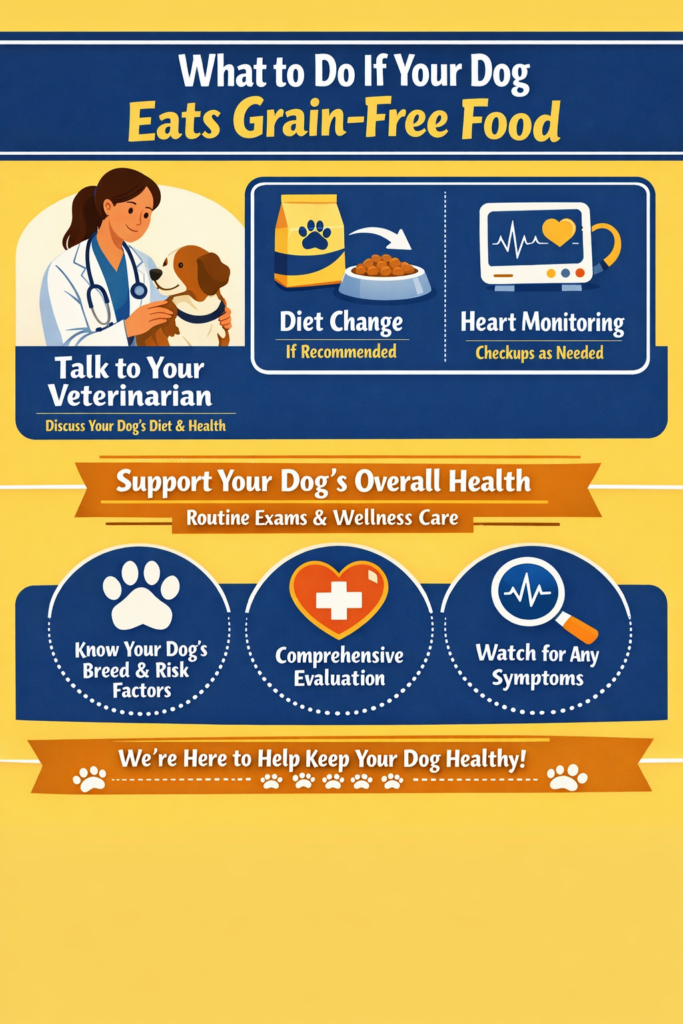
If your dog is currently eating a grain-free diet, there is no need to panic. The most important step is to bring it up with your veterinarian. Some dogs have been on these diets for years without any sign of trouble, while others may be more vulnerable depending on breed, size, genetics, and overall health. A thorough evaluation can help determine whether additional monitoring is appropriate for your individual dog.
In some cases, a diet change may be recommended, and in others, periodic cardiac monitoring may be suggested. Keeping your dog up to date on routine veterinary care supports their overall health and gives us the best opportunity to catch any concerns early. Nutrition is just one piece of your dog’s overall wellness picture, and we are here to help you put all the pieces together.
Talk to Pawtown Veterinary Care About Your Dog’s Diet and Heart Health
Navigating pet nutrition decisions, especially when the science is still unfolding, can feel overwhelming. At Pawtown Veterinary Care, Drs. Erin Miller and Lauren Stayer take a thoughtful, personalized approach to every dog’s care. We have been proudly serving the Bend community for three years, building the kind of family-like practice where your dog is known by name and your questions are always welcome.
Whether you have questions about your dog’s current diet, want to schedule a cardiac evaluation, or simply need guidance on what food choices are best for your pet’s life stage and breed, we are ready to help. If you are concerned about your dog’s heart health or nutritional needs, reach out to us today to request an appointment.
Frequently Asked Questions About Grain-Free Diets and Canine Heart Disease
Should I stop feeding my dog grain-free food immediately?
Not necessarily, and not without talking to your veterinarian first. Abruptly switching foods can cause its own digestive upset. Bring your dog’s current diet to your next visit so we can assess breed risk, current heart health, and whether a gradual transition makes sense.
Which dog breeds are most at risk for diet-related DCM?
Large and giant breeds with a known genetic predisposition, such as Doberman Pinschers, Great Danes, and Irish Wolfhounds, are traditionally at higher risk. However, cases in Golden Retrievers, Labrador Retrievers, and other breeds without a typical genetic link are part of why the FDA began investigating diet as a contributing factor.
Can DCM be reversed if caught early?
In diet-associated cases, some dogs show meaningful improvement in heart function after switching diets and adding supportive nutrients, particularly when caught early. Genetic forms of DCM are typically managed rather than reversed. Early detection through routine wellness exams gives your dog the best chance at either outcome.
What tests diagnose DCM in dogs?
Diagnosis typically involves a physical exam, chest X-rays, bloodwork, and often an echocardiogram to evaluate the heart’s chambers and pumping function. Taurine level testing may also be recommended when a diet-related cause is suspected.
Are grain-inclusive diets guaranteed to prevent DCM?
No. DCM can occur in dogs on grain-inclusive diets too, and genetics play a significant role independent of diet. The safest approach is an individualized nutrition plan built around your dog’s breed, age, and health history rather than assuming any single food category is risk-free.
About the Author
Co-Owner and Veterinarian, Pawtown Veterinary Care
Dr. Miller is a co-founder of Pawtown Veterinary Care in Bend, Oregon, where she and Dr. Lauren Stayer built a practice centered on honest communication and compassionate, family-centered care for dogs and cats across Central Oregon.