When your dog or cat gets hurt — on a trail, in the yard, in a scuffle with another animal — you need a vet who can assess and treat the injury the same day. At Pawtown Veterinary Care in Bend, Oregon, Dr. Erin Miller and Dr. Lauren Stayer handle injury treatment for dogs and cats during business hours Monday through Saturday, 8 am to 5 pm. Call us at 541-313-3607 if your pet is hurt and we’ll help you figure out how quickly they need to be seen.
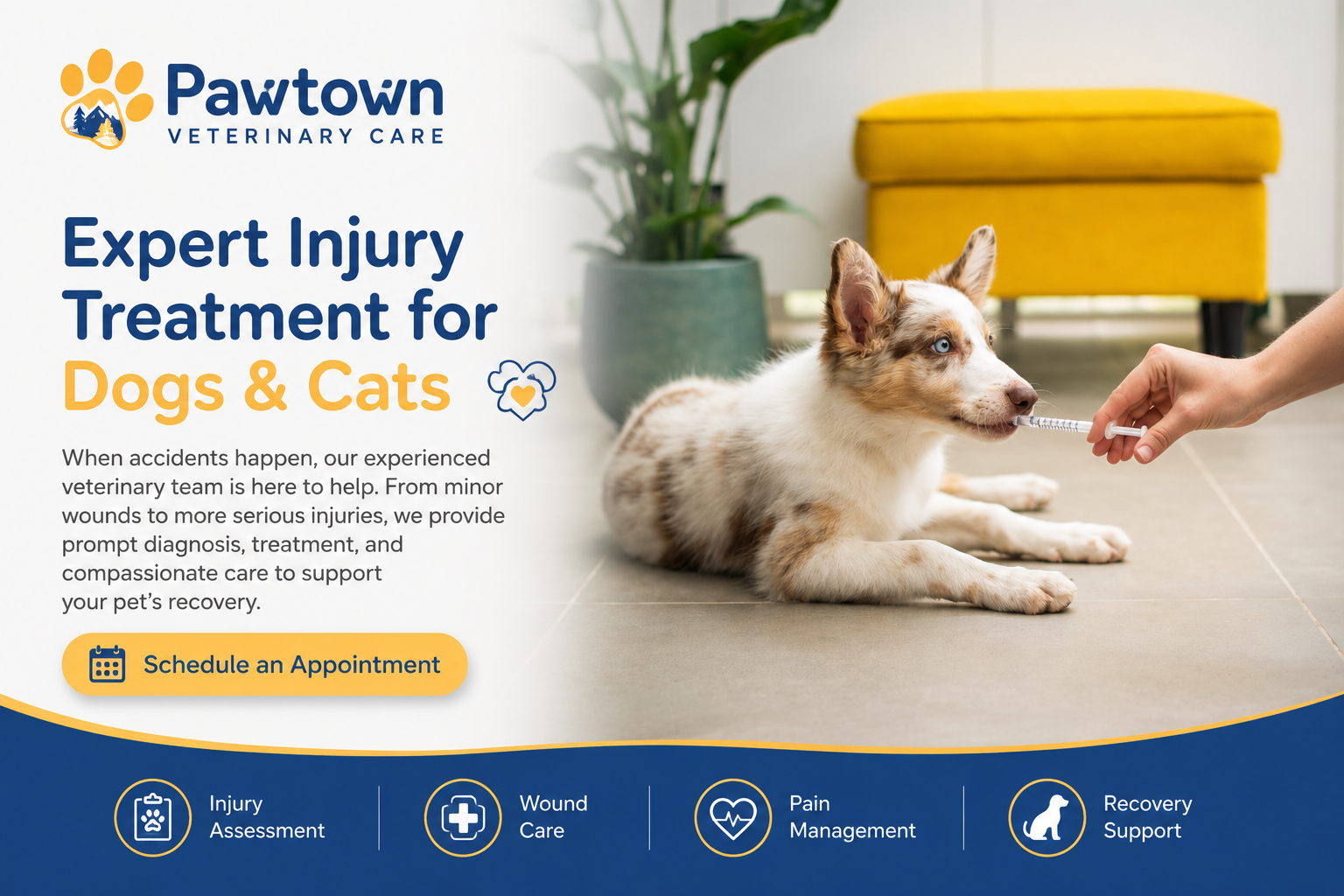
Central Oregon’s outdoor lifestyle puts pets in situations that urban practices rarely encounter — rocky trail terrain, wildlife encounters, extreme temperatures, and more. Our familiarity with these regional injury patterns means we recognize what we’re dealing with quickly and treat it accurately from the start. For a full picture of what we offer, visit our veterinary services page.
Types of Pet Injuries We Treat in Bend
The ASPCA recommends that any injury causing visible pain, limping, or bleeding that won’t stop warrants a same-day veterinary call at minimum. Here’s what we commonly treat at Pawtown:
- ✓Trail & Outdoor Injuries — Paw lacerations from volcanic rock, puncture wounds, sprains from uneven terrain, and overexertion on Bend’s trails.
- ✓Bite Wounds — Dog fights, wildlife encounters with coyotes or raptors, and cat bites all require same-day cleaning and antibiotic evaluation.
- ✓Eye Injuries — Scratches, foreign objects, and plant material need same-day care — minor irritation can become a corneal ulcer within hours.
- ✓Cuts & Soft Tissue — Lacerations, scrapes, bruising, and muscle strain — proper cleaning, closure, and bandaging prevent infection and speed healing.
- ✓Orthopedic Injuries — Sprains, non-emergency fractures, and limb injuries need evaluation and pain management before a longer-term treatment plan.
- ✓Porcupine Quills — Deep or clustered quills near eyes or mouth require professional removal under pain management to prevent tissue migration.
When to Call Us — and What to Do Before You Arrive
Here’s what to do if your pet is injured — during our hours or after.
How We Assess and Treat Your Pet's Injury
When your injured pet arrives, Dr. Miller or Dr. Stayer does a systematic physical examination immediately — assessing the full extent of the injury, not just the presenting wound. Pain management starts at the same time as assessment, so your pet is more comfortable and easier to examine. We always explain what we’re finding and what we recommend before proceeding with any treatment.
Our in-house diagnostics — including digital x-rays and in-clinic lab work — let us evaluate suspected fractures, internal involvement, or systemic response without sending your pet to another facility. This same-visit assessment saves time and gives us a complete picture before we commit to a treatment plan.
Central Oregon trail hazards like cheatgrass and winter paw injuries are among the most common injury types we see. Treatment depends on what we find. It may include wound cleaning, closure with sutures or tissue adhesive, splinting or bandaging for support, pain medication, antibiotics, fluid therapy, or referral if the injury requires specialty surgical care beyond what we provide in-house. Whatever the path, we give you clear written discharge instructions and a direct line for questions during recovery.
Wound Care and Recovery
How a wound is closed — or whether it’s closed at all — significantly affects healing time and the risk of infection. Some wounds heal best when left open with regular cleaning and bandage changes, particularly bite wounds and punctures where bacteria need a way out. Others require sutures, surgical staples, or tissue adhesive for proper closure. We select the approach that gives the best outcome for the specific injury, its location, and how much time has passed since the injury occurred.
At discharge, you’ll leave with clear written home care instructions: how to clean and bandage the wound, what signs of infection to watch for, medication dosing and schedule, activity restrictions, and a timeline for follow-up. Most pets with non-surgical injuries recover well within 7–14 days with consistent home care and any rechecks we recommend. If you have questions during recovery — or something looks different than expected — call us at 541-313-3607. We’d rather you call than wait on something that needs attention sooner. We also offer same-day appointments for follow-up concerns during regular hours.
Injured Pet in Bend? Contact Pawtown
Dr. Erin Miller and Dr. Lauren Stayer are available for injury assessment and treatment Monday through Saturday, 8 am to 5 pm. When your pet is hurt, don’t wait to find out if it’s serious — call us at 541-313-3607 and we’ll help you assess right away. We accept walk-ins for urgent injury cases and can often accommodate same-day appointments. Pawtown accepts CareCredit and Scratch Pay to help manage unexpected treatment costs. You can also reach us through our contact page.
What should I do if my pet is injured on a hike or trail?
Call us immediately at 541-313-3607 if you’re within our business hours (Monday–Saturday, 8 am–5 pm). Apply gentle pressure to any bleeding wound with a clean cloth, keep your pet calm and still, and bring them in. Don’t attempt to clean deep punctures or remove embedded objects. If the injury is severe — suspected fracture, uncontrolled bleeding, difficulty breathing — head directly to an emergency facility if we’re closed, or call us on your way in during our hours.
My dog got in a fight with another dog. Do I need to come in?
Yes — bite wounds almost always need same-day evaluation, even when they look minor. Puncture wounds from dog bites can introduce bacteria deep into tissue where it’s hard to clean without professional tools. We’ll assess the depth, clean thoroughly, and determine whether antibiotics or sutures are needed. Call ahead so we’re ready for you.
My cat scratched their eye — is that an emergency?
Eye injuries should be seen the same day whenever possible. Eye conditions can deteriorate quickly — minor irritation can become a corneal ulcer within hours without treatment. If your pet is squinting, pawing at the eye, has visible discharge, or the eye looks cloudy, swollen, or inflamed, call us right away. We prioritize eye injuries because timing directly affects outcome.
How do I know if a wound needs stitches?
Any wound that is deep, gaping, doesn’t stop bleeding with 5–10 minutes of direct pressure, or is on a joint or area of movement likely needs professional closure. Wounds with visible tissue layers, or that occurred in a way that could have introduced debris, also need evaluation. When in doubt, call — we can help you assess over the phone.
Can I remove porcupine quills at home?
You can remove superficial quills if they’re clearly near the surface and you can grasp them cleanly near the base. Do not cut quills before removing them — this makes extraction harder, not easier. Deep clusters, quills near the eyes or mouth, or any that have been in for more than a few hours should be handled by us under appropriate pain management. An improperly removed quill can break off and migrate deeper into tissue.
Does Pawtown treat injuries on weekends?
Yes. We’re open Saturday 8 am–5 pm for injury treatment and urgent care. For injuries that occur on Sundays or after hours, contact Bend Animal Emergency and Specialty Center or the Veterinary Referral Center of Central Oregon, both of which provide 24-hour care. We’re happy to coordinate follow-up care when you return to us.
Medically Reviewed By
Dr. Erin Miller, DVM & Dr. Lauren Stayer, DVM
Owners & Veterinarians, Pawtown Veterinary Care — Bend, Oregon