When your dog or cat is ready to be spayed or neutered, you want the procedure done by someone who knows your pet — not a high-volume clinic where they’re just another surgical case. At Pawtown Veterinary Care, Dr. Erin Miller and Dr. Lauren Stayer personally perform spay and neuter surgeries for their own patients. The doctors who examine your pet at every wellness visit are the same doctors operating on them. That continuity matters for pre-operative planning, for catching anything unusual during surgery, and for the care you receive during recovery.
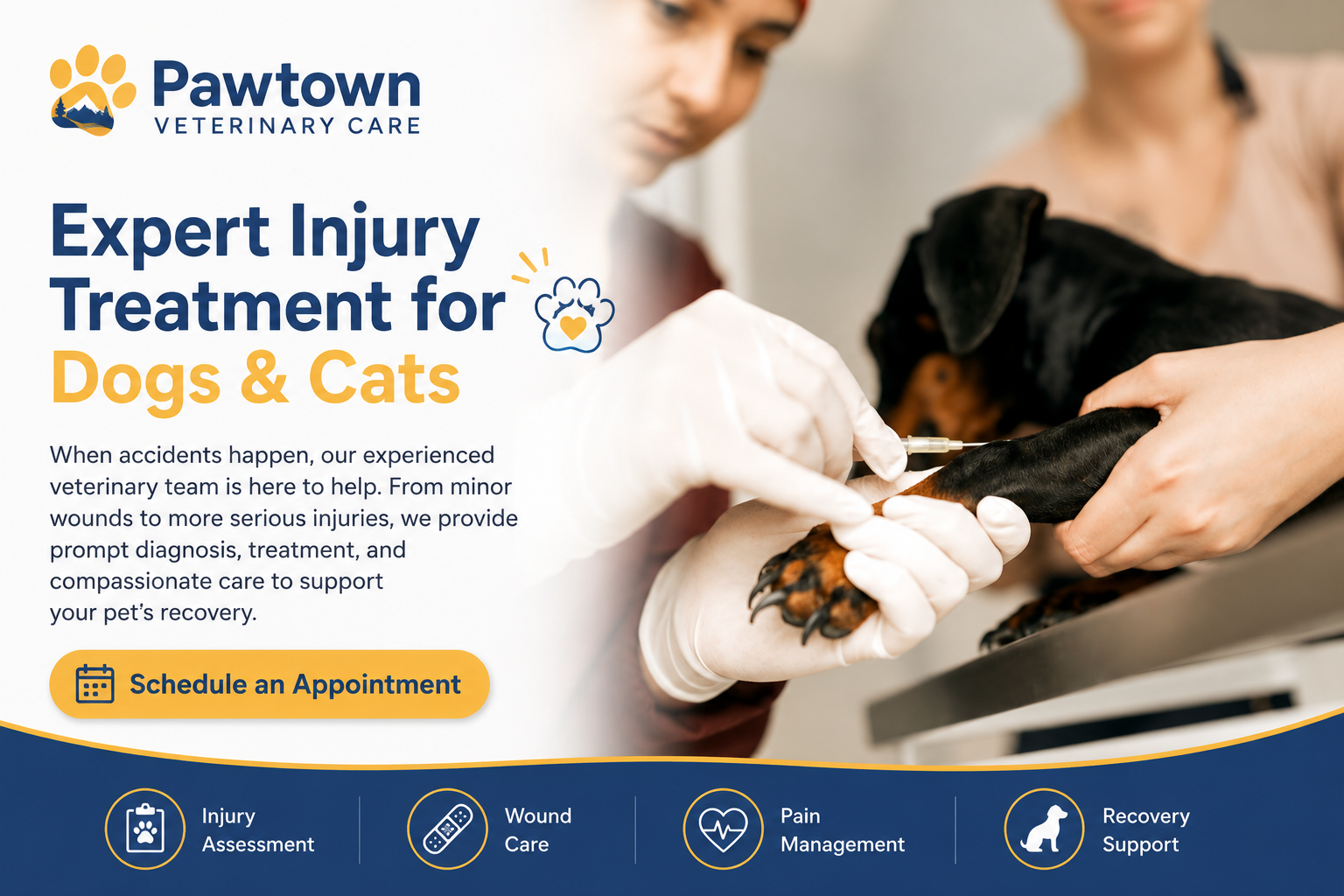
As Bend’s locally owned small animal practice, we approach spay and neuter surgery the same way we approach everything else: with individualized attention and the same standard of care we would want for our own animals. For a full overview of our surgical and wellness services, visit our veterinary services page.
Spay and Neuter Surgery at Pawtown
Spaying (ovariohysterectomy) removes a female pet’s ovaries and uterus. Neutering (castration) removes a male pet’s testicles. Both are performed under general anesthesia in our surgical suite, with continuous vital sign monitoring throughout the procedure. According to the American Veterinary Medical Association, spaying and neutering are among the most effective things you can do to improve your pet’s long-term health and lifespan.
Before any surgery, we perform a thorough pre-operative examination and recommend blood work to confirm your pet is healthy for anesthesia and to establish a baseline we can reference in future visits. During surgery, we use IV catheters and fluids on all canine spays and neuters, as well as feline spays — this maintains blood pressure, supports kidney perfusion, and gives us immediate IV access in the rare event of a complication. We also perform local anesthetic blocks at the surgical site, which reduce the amount of general anesthetic needed and make recovery more comfortable. Pain management continues through discharge with oral medication and detailed home care guidance.
Health Benefits of Spaying and Neutering
For female dogs and cats, spaying eliminates the risk of ovarian and uterine cancers and dramatically reduces the likelihood of mammary tumors — particularly when performed before the first heat cycle. Spayed females are also protected from pyometra, a severe uterine infection that develops in unspayed females and often requires emergency surgery to treat. Pyometra is common, potentially fatal, and entirely preventable.
For male dogs and cats, neutering eliminates testicular cancer and reduces the incidence of prostate disease and certain hernias later in life. Neutered males are also significantly less likely to roam in search of mates — behavior that leads to fights, car accidents, and exposure to disease. Marking and mounting behaviors are reduced as well, making household life easier.
Beyond the medical benefits, spayed and neutered pets tend to be calmer and more focused on their family. Their core personality and energy level don’t change — they simply become easier to live with. Research consistently shows that spayed and neutered pets live longer than their intact counterparts, and the long-term savings on avoided treatments far outweigh the cost of the procedure.
- ✓Eliminates ovarian and uterine cancer risk
- ✓Dramatically reduces mammary tumor likelihood
- ✓Prevents pyometra — a severe, often fatal uterine infection
- ✓Calmer behavior during heat cycles
- ✓Longer average lifespan
- ✓Eliminates testicular cancer
- ✓Reduces prostate disease and certain hernias
- ✓Significantly less roaming, fighting, and disease exposure
- ✓Reduced marking and mounting behaviors
- ✓Longer average lifespan
When Is the Right Time to Spay or Neuter?
For most cats and small to medium dogs, we recommend spaying or neutering between 4 and 6 months of age, before they reach sexual maturity. Timing in this window provides the strongest health benefits — particularly the reduction in mammary cancer risk in females — and tends to result in the smoothest recovery.
For large and giant breed dogs, we often recommend waiting until 6 to 12 months, or occasionally longer depending on the breed. Larger breeds develop more slowly, and their musculoskeletal growth can be influenced by sex hormones in ways that matter for long-term joint health. During your dog’s comprehensive exam, Dr. Miller or Dr. Stayer will discuss the timing that makes the most sense for your specific dog’s size, breed, and health status — not a one-size-fits-all answer.
Adult pets can also be safely spayed or neutered. Recovery may take slightly longer in older animals, and we may recommend additional pre-operative testing depending on age and health. If you’ve adopted an adult pet and aren’t sure whether they’ve been altered, we can check during an exam and advise accordingly.
What to Expect on Surgery Day
You will drop off your pet in the morning after following pre-operative fasting instructions (typically no food after midnight). We will confirm the surgical plan, review any bloodwork results, and answer last-minute questions before you leave. Most pets go home the same afternoon once they have recovered from anesthesia and we are confident they are stable and comfortable.
We call with updates throughout the day and contact you when your pet is ready for pickup. At discharge, we walk you through the home care plan in detail: activity restrictions, incision monitoring, pain medication dosing and schedule, and what signs warrant a call to us. Most pets are moving around normally within a day or two, and the incision heals fully over 10 to 14 days.
We are available by phone throughout your pet’s recovery if anything concerns you. If the incision looks unusual, your pet isn’t eating, or you have any question about whether something is normal, call us at 541-313-3607 — we would rather hear from you than have you worry alone.
Common Questions About Spay and Neuter Surgery
Will surgery change my pet’s personality? No. Spaying and neutering reduce behaviors driven by sex hormones — roaming, marking, mounting, and some forms of aggression — but your pet’s core personality and energy level stay the same. Dogs don’t become “less themselves” after surgery. They simply no longer have hormonal drives pushing them toward behaviors that usually lead to trouble.
Will my pet gain weight? Not because of surgery. Weight gain after spaying or neutering typically comes from reduced activity and unchanged caloric intake, not from the procedure itself. We provide nutritional guidance at discharge and are happy to discuss appropriate diet and activity levels at any follow-up visit.
Should I use a low-cost clinic instead? Low-cost and nonprofit spay/neuter clinics serve an important role and are a good option for many pet owners. The difference at a full-service practice like Pawtown is continuity: we know your pet’s history, we can cross-reference pre-operative bloodwork against your pet’s baseline, and we are your point of contact for any follow-up questions during recovery. You are not a one-time surgical patient here — you are a client whose pet we will continue caring for throughout their life.
Schedule Your Dog or Cat's Spay or Neuter in Bend
If you are ready to schedule your pet’s spay or neuter, you can request an appointment to get started, or contact us directly to discuss timing and what to expect. Dr. Erin Miller and Dr. Lauren Stayer are happy to answer questions before you commit to a date — especially for large breed dogs where the timing conversation is worth having in advance.
Pawtown is open Monday through Saturday, 8 am to 5 pm. Call us at 541-313-3607 or reach out through our contact page. We accept CareCredit and Scratch Pay for surgical procedures, and we will give you a clear cost estimate before scheduling.
At what age should I spay or neuter my pet?
For most cats and small to medium dogs, we recommend spaying or neutering between 4 and 6 months of age. For large and giant breed dogs, we typically recommend waiting until 6 to 12 months depending on the breed. Dr. Miller and Dr. Stayer will give you a specific recommendation based on your pet’s size, breed, and health at their exam — not a blanket answer.
Is spay and neuter surgery safe?
Yes. Spay and neuter are among the most commonly performed veterinary surgeries. At Pawtown, we use IV catheters and fluids throughout all canine and feline spays, continuous anesthesia monitoring, local anesthetic blocks at the surgical site, and comprehensive pain management. Pre-operative blood work confirms your pet is healthy for anesthesia before we proceed.
How long is recovery after spay or neuter surgery?
Most pets are moving around normally within 24 to 48 hours. Full incision healing takes 10 to 14 days. During that time, we ask you to restrict running, jumping, and rough play, and to keep your pet from licking the incision. We provide detailed home care instructions at discharge and are available by phone with any questions during recovery.
Will my pet’s personality change after surgery?
No. Spaying and neutering reduce behaviors driven by sex hormones — roaming, marking, mounting, and hormone-driven aggression — but your pet’s core temperament and energy level stay the same. Most pet owners notice their pets are calmer and more focused on their family after surgery, not “different.”
How much does spay or neuter surgery cost at Pawtown?
Cost varies based on your pet’s species, size, age, and whether pre-operative bloodwork or additional services are needed. We provide a transparent estimate before scheduling. Pawtown accepts CareCredit and Scratch Pay to help manage the cost. Call us at 541-313-3607 for specific pricing information.
Can adult pets be spayed or neutered?
Yes. Adult dogs and cats can be safely spayed or neutered. Recovery may take slightly longer than in younger animals, and we may recommend additional pre-operative testing depending on age and health history. The health benefits — particularly prevention of pyometra in females and prostate disease in males — apply at any age.